
How to Brew Tea in a Samovar: Step-by-Step Guide & Safety Notes
7 October 2026 · Berberoğlu Çay
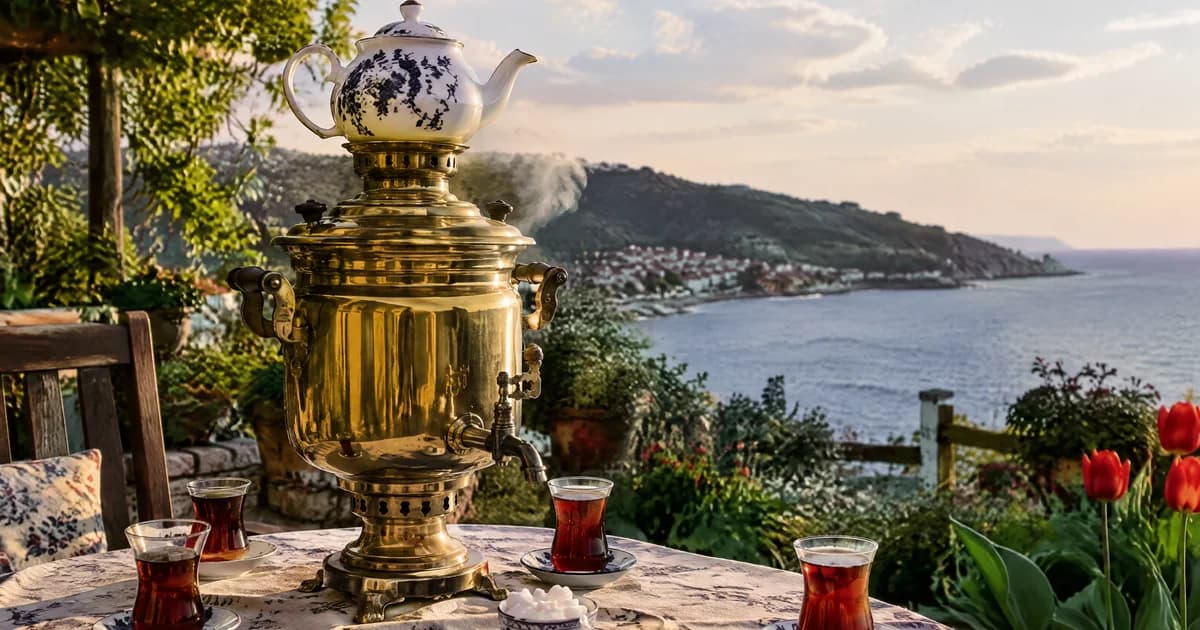
Brewing tea in a samovar is straightforward: fill the samovar with fresh water, bring it to the boil, add tea to the teapot and pour boiling water over it, then set the teapot on top of the samovar and leave it to steep over low heat. What makes a samovar special is that the water below stays hot continuously while the teapot is gently, evenly heated by the rising steam. Charcoal samovars must only be used outdoors, and electric samovars must never be switched on without water.
The samovar is a centrepiece of garden gatherings, picnic mornings and busy guest tables. Below you will find a step-by-step guide for both charcoal (fire-heated) and electric samovars, along with essential safety notes you should never overlook.
Why Does a Samovar Produce a Different Cup of Tea?
With a standard Turkish double teapot (çaydanlık) the brewing pot is heated by steam from the water directly on the hob; in a samovar, a large body of water stays hot for a long time and the teapot sits on top, steeping in gentle, steady warmth. This means:
- Hot water is ready for hours, perfect for large gatherings.
- Because the teapot never overheats, the tea is far less likely to turn bitter or "stew".
- Everyone can adjust the strength of their own glass, from light to dark.
Brewing Tea in a Samovar: Step by Step
- Check the samovar: If there is any old water, limescale or residue inside, clean and rinse it first.
- Fill with fresh water: Fill the samovar with fresh, odour-free water up to the level indicated by the manufacturer. For advice on water choice, see our post on which water to use for tea.
- Start heating: For a charcoal samovar, light the fire; for an electric samovar, plug it in and switch it on.
- Prepare the teapot: Rinse the teapot with a little hot water to warm it, then add your tea. A good starting point is roughly one teaspoon per person; adjust to your own taste.
- Add boiling water: Once the water boils, draw enough from the tap into the teapot to just cover the tea leaves.
- Place the teapot on top: Set the teapot into the cradle on top of the samovar. Turn the heat down if possible; with a charcoal samovar, do not add extra fuel.
- Wait for it to steep: For Berberoğlu tea we recommend approximately 25 minutes over low heat. For more detail, see our 25-minute brewing guide.
- Serve: Pour the concentrated brew into a glass first, then top up with hot water from the samovar's tap. As the teapot empties, prepare a fresh brew.
Safety Notes for Charcoal (Fire-Heated) Samovars
Burning charcoal and wood can release carbon monoxide — a colourless, odourless, poisonous gas. The following rules are therefore non-negotiable when using a charcoal samovar:
- Use outdoors only. Never light a charcoal samovar in an enclosed room, tent, closed balcony, garage or caravan.
- Never light it without water. A samovar fired up without enough water can be damaged; top up the water level as it drops.
- Place it on a firm, level surface. Keep it well away from dry grass, leaves and flammable materials.
- Keep children and pets away. The body and chimney of the samovar get extremely hot.
- Extinguish the fire completely. When you have finished, do not tip the ashes into a bin or onto grassland before they have fully cooled.
- If you notice symptoms such as headache, dizziness or nausea, move into fresh air immediately and call the emergency services (112) if necessary.
Safety Notes for Electric Samovars
- Read the appliance's user manual; observe the minimum and maximum water levels.
- Never run the samovar empty. If the water runs low, unplug it first, then add water.
- Make sure the cable, plug and socket are in good condition; use an earthed socket.
- Do not touch the plug with wet hands, and do not use the appliance near a sink or standing water.
- Limescale reduces the element's efficiency; descale regularly using the method recommended by the manufacturer.
Charcoal or Electric?
| Feature | Charcoal samovar | Electric samovar |
|---|---|---|
| Where to use | Outdoors only | Indoors and anywhere with a power socket |
| Heat control | Difficult — adjusted by fuel quantity | Easy — most models have a setting |
| Atmosphere | Traditional; ideal for picnics and gardens | Practical, everyday use |
| Key risk | Carbon monoxide, fire hazard | Electrical safety, never run dry |
Common Samovar Mistakes
- Overheating the teapot: Leaving the teapot over too fierce a flame makes the tea bitter. Low heat is all you need.
- Drinking stale brew without refreshing it: A brew that has sat for hours turns harsh; make a fresh pot during long sessions.
- Leaving water in the samovar for days: Use fresh water every time.
- Filling the teapot to the brim and forgetting about it: Keeping the teapot roughly half full is a common practice to maintain the right brew-to-water ratio.
The teapot material also affects the result. For the differences between porcelain and steel teapots, take a look at our teapot selection guide.
Tips for Enjoying a Samovar at Picnics and in the Garden
A samovar usually takes pride of place outdoors, at the heart of a busy table. A few simple preparations will boost both enjoyment and safety:
- Bring plenty of water: Bear in mind that the samovar will need topping up throughout the day. Fill containers with fresh drinking water.
- Pre-portion your tea: Measure out your loose tea into a small, lidded container; do not take the entire packet into a damp, sunny picnic setting.
- Watch the wind: Position a charcoal samovar where the wind will not carry sparks towards trees, tents or dry grass.
- Be ready to extinguish: Keep a bucket of water or sand nearby. In some areas — particularly woodland during summer — open fires may be prohibited; follow local regulations.
- Refresh the brew: During long sessions, prepare a fresh pot as the teapot empties; a brew left for hours turns bitter.
If you find it hard to estimate how many pots a crowd will need, a practical approach is to allow roughly two to three glasses per person to start with and refresh the tea in small pots as you go.
A little care after use extends your samovar's lifespan. For a charcoal samovar, empty the ashes only once they have cooled completely, leave the body open until it dries and do not store it sealed in a damp place. For an electric model, do not leave water inside; this simple habit alone significantly reduces limescale and odour build-up.
Frequently Asked Questions
How long does tea take to brew in a samovar?
It depends on the tea and the heat. For Berberoğlu tea the recommended time is approximately 25 minutes over low heat.
Can a charcoal samovar be used indoors?
No. Because burning charcoal can produce poisonous carbon monoxide gas, a charcoal samovar must only be used outdoors.
What should I do when the samovar runs out of water?
With an electric samovar, unplug it first and then add water. With a charcoal samovar, never let the water level drop too low — top it up at regular intervals.
How do I descale a samovar?
A common method is to boil water with vinegar or citric acid, then rinse several times with clean water. For electric models, check the manufacturer's manual first.
Which tea works best in a samovar?
Loose-leaf black teas with a balanced leaf structure, suited to long steeping at low heat, give the best results in a samovar.
Conclusion: A Patient Brew, a Safe Samovar
A samovar is the very symbol of unhurried tea drinking. With fresh water, low heat and the right steeping time, you can serve perfectly fresh tea for hours — the only condition is never to compromise on safety. For large gatherings, a big pack such as Tiryaki Black Tea 1000 g is ideal; browse the packaged teas category for more options.