How to Spot Dyed Tea: Risks and 4 Simple Tests at Home
7 October 2026 · Berberoğlu Çay
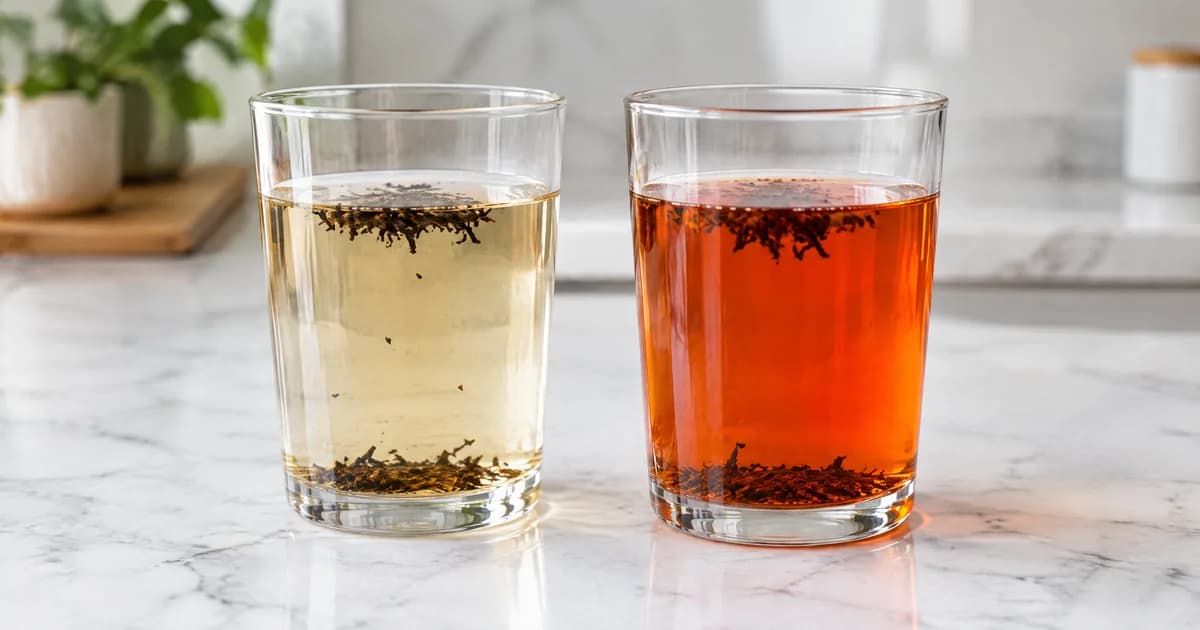
Dyed tea is tea that has been adulterated with unauthorised food colourants to make it look darker and more "full-bodied." The easiest way to detect it is the cold water test: natural dry tea releases colour very slowly in cold water, producing only a pale hue, whereas dyed tea turns the water deep orange-red within seconds. A wet napkin, rubbing in your palm and abnormal colour during brewing are also important clues. Under the Turkish Food Codex, adding colourants to tea is prohibited — meaning dyed tea is classed as adulteration, i.e. food fraud.
What Is Dyed Tea and Why Is It Made?
The familiar reddish-amber colour tea gives when brewed develops naturally during processing — particularly during the oxidation stage (commonly called fermentation). When quality leaves go through proper withering, rolling, oxidation and drying, they naturally produce a beautiful colour once brewed.
Low-quality, stale or improperly processed leaves cannot produce that colour. This is exactly where dyed tea enters the picture: colourant is sprayed onto or mixed into the tea to make a weak product look more "full-bodied" and "high-quality," or to turn cheap dust and sweepings into something sellable. The consumer sees the dark colour in the glass and assumes the tea is good — yet the colour comes not from the leaf but from an additive.
The Turkish Food Codex does not permit the addition of colourants to tea. Dyed tea is therefore classified as imitation and adulteration under the regulations. The Ministry of Agriculture and Forestry publishes products found to be imitated or adulterated during inspections at guvenilirgida.tarimorman.gov.tr. Checking this list before buying tea is a good habit.
Potential Risks of Dyed Tea
The effect of dyed tea on health depends on the type and amount of colourant used — and that is precisely where the problem begins: in an illicit or fraudulent product it is impossible to know which substance was used, or how much. For this reason the risks should be viewed not as certainties but as possibilities that warrant caution:
- Possible allergic reactions: Certain synthetic dyes, particularly azo dyes, have been linked to allergic reactions in sensitive individuals. People who experience itching, redness or similar complaints are advised to avoid such additives.
- Unknown-source risk: Industrial dyes of unknown origin, not intended for food use, may carry unwanted residues such as heavy metals. Regular consumption of such substances is regarded as a risk by experts.
- Poor-quality leaf underneath: Dye is most often used to disguise poor raw material. Behind the colour there may be stale, damp or improperly stored leaves.
- A misled palate: Consumers accustomed to deep colour may find natural tea "too light" and start over-brewing.
Nobody can say for certain what will happen after a single glass of dyed tea, but not knowing what you are drinking is a risk in itself. If you have any complaints, consult your doctor.
4 Simple Tests at Home: How to Spot Dyed Tea
The tests below are no substitute for laboratory analysis, but they can help you screen a suspect tea in just a few minutes. For the most reliable result, carry out the tests together and, if possible, compare side by side with a tea you trust.
1. Cold Water Test
- Fill a clear glass with room-temperature or cold water.
- Sprinkle a teaspoon of dry tea on top — do not stir.
- Watch the area around the tea for the first 30 seconds to 1 minute.
Natural tea: Opens very slowly in cold water, giving only a pale, light yellow-amber colour over several minutes. Dyed tea: Within seconds, dark orange-red colour seeps from the leaves like "smoke" and streams downward in streaks. Dust or very finely cut teas may release colour a little faster, but with natural tea the colour still remains pale.
2. Wet White Napkin Test
Lightly dampen a white paper napkin, sprinkle a pinch of dry tea on it and wait a few minutes. Then shake off the tea and examine the napkin. Natural tea leaves no noticeable mark, or only very faint yellowish spots. Dyed tea leaves distinct orange, red or dark-coloured stains on the napkin.
3. Palm Rubbing Test
Rub a pinch of dry tea in your slightly damp palm for a few seconds. Natural tea may leave dust on your hand but will not transfer colour. If an orange-red dye mark remains on your palm, this is a strong sign that the tea may contain added colourant.
4. Brewing Observation: Colour and Taste Harmony
Natural tea releases its colour gradually during brewing, and colour and taste are in harmony: a dark brew comes with a deep, astringent flavour. With dyed tea, the pot darkens abnormally fast — almost as soon as the water heats — yet the taste in the glass is watery, bland or oddly "empty." If the colour is very dark but the taste is weak, it is worth pausing to think.
| Test | Natural tea | Suspected dyed tea |
|---|---|---|
| Cold water | Slow, pale light colour | Deep orange-red within seconds |
| Wet napkin | No mark or very faint | Distinct coloured stains |
| Palm rubbing | No colour transfer | Dye transfers to hand |
| Brewing | Colour and taste in harmony | Very fast dark colour, weak taste |
What to Look for When Buying Tea
You can reduce most of the risk while still at the shelf, without needing any tests. Dyed tea is typically sold through unregulated channels — loose, unpackaged and unidentified. Pay attention to the following:
- Label: The producer's name, address, batch number and best-before date should all be present.
- Price: Question "per kilo" offers that are far below market price.
- Source: Be cautious of teas sold loose and unlabelled, claimed to be "fresh from Rize" but without documentation.
- Receipt/invoice: Keep proof of purchase; this is your recourse if a problem arises.
You may also want to read our article on the risks of smuggled tea and our guide on how to choose quality tea, where we cover these topics in more detail.
What to Do If You Have Suspicions
- Stop consuming the tea and keep the packaging, label and receipt.
- Note which shop you bought it from and when.
- You can report it via the Ministry of Agriculture and Forestry's ALO 174 Food Hotline.
- If you have any health-related complaints, consult your doctor without delay.
Home tests are only a guide; a definitive result requires laboratory analysis. Rather than continuing to consume a suspect product on the assumption that "it'll be fine," the best course of action is to report it through official channels.
Frequently Asked Questions
How can you spot dyed tea?
The most practical method is the cold water test: sprinkle a spoonful of dry tea into cold water. If a deep orange-red colour spreads within seconds, the tea may be dyed; natural tea releases colour slowly and palely in cold water.
Is dyed tea harmful?
The effect depends on the dye used, and in a fraudulent product it is impossible to know what that is. Certain synthetic dyes have been linked to allergic reactions in sensitive individuals, while industrial dyes of unknown origin may carry residues such as heavy metals.
Is it legal to add dye to tea?
No. Under the Turkish Food Codex, adding colourants to tea is prohibited; the practice is classified as imitation and adulteration.
Does tea that darkens very quickly mean it is dyed?
Not necessarily — finely cut teas can release colour faster. However, if the colour darkens very quickly yet the taste remains weak, it is worth checking with the cold water and napkin tests.
Where can I find out which teas have been found to be adulterated?
The Ministry of Agriculture and Forestry publishes products found to be imitated or adulterated at guvenilirgida.tarimorman.gov.tr.
Conclusion: Choose Tea Whose Colour Comes from the Leaf
The secret to a beautiful brew lies not in dye but in leaves picked at the right time, careful processing and patient brewing. At Berberoğlu, we source fresh tea leaves directly from growers in Rize and process them in our own factory in Rize. You can put our Mayıs Black Tea 1000 g — made from the first flush leaves — through the cold water test yourself, then watch the colour develop gradually during a slow brew of around 25 minutes on low heat. Our article on rabbit's blood tea will also help you find the perfect colour.