What to Look for When Buying Wholesale Tea: A Guide for Cafés, Hotels and Dealers
7 October 2026 · Berberoğlu Çay
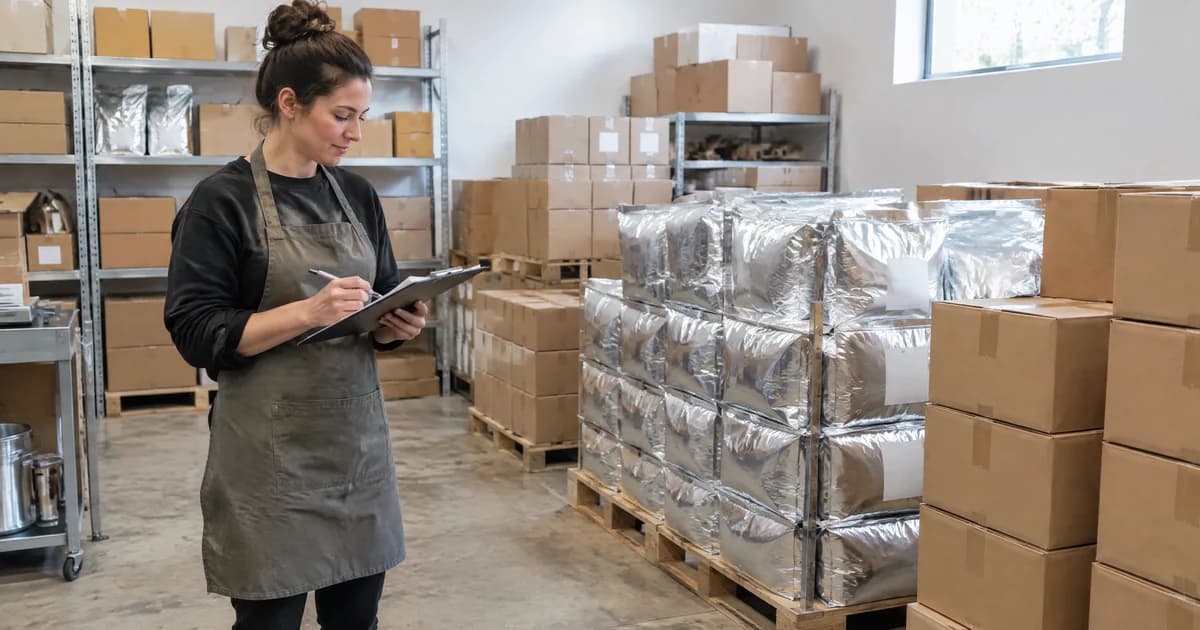
When buying wholesale tea, the most important things to watch for are invoiced sales, clear producer information on the packaging, sample tasting before placing a large order, consistent year-round supply at the same quality, clearly stated payment terms and proper storage of the tea at your premises. Whether you run a café, hotel, restaurant or dealership, clarifying these points before discussing price protects both your customer satisfaction and your business.
Why Price Shouldn't Be Your Only Criterion
In a café or hotel, tea is often the most frequently served drink of the day. Customers expect the same colour, the same aroma and the same taste in every glass. A tea that costs a little less per kilo but varies from batch to batch may look like a saving in the short term, yet in the long run it leads to customer loss and complaints. On top of that, tea of unknown origin bought without an invoice puts your business directly at risk in terms of food safety and tax compliance. We covered the details of these risks in our article on the risks of unregistered tea.
Wholesale Tea Buying Checklist
Keep the following list to hand before you start talking to a supplier:
- Invoice: Make sure every purchase is invoiced. The invoice should clearly state the product name, quantity and unit price.
- Producer information: The packaging must legibly show the producer company, production site, batch/serial number and use-by or best-before date.
- Samples and tasting: Request a sample before any large order and try it with your own water and your own teapot.
- Consistent supply: Ask whether the supplier can deliver the same product at the same quality all year round.
- Payment terms: The credit period, open-account limit and how statement tracking is handled should all be in writing.
- Delivery: Delivery lead time after ordering, shipping method and the procedure for damaged deliveries should be clearly defined.
- Storage: Plan where, how and for how long you will keep the tea once it arrives.
How to Conduct a Sample Tasting
Taste the sample exactly the way you serve tea to your customers. Use your own water source, your own teapot or samovar and your usual brewing time. If you are comparing several teas, brew them all in the same quantity for the same length of time.
- Examine the dry leaf: How uniform is the leaf size? Is there excessive dust at the bottom of the packet?
- Pay attention to the smell: Fresh tea smells clean and pleasant; there should be no mould, dampness or foreign odour.
- Do a cold-water test: Drop a pinch of tea into a glass of cold water. Natural tea releases its colour very slowly and faintly; if it colours the water darkly within seconds, be cautious. For more detail, see our article on how to spot dyed tea.
- Taste after standing: In cafés and hotels, tea often sits in the pot for a long time. Check how the taste changes an hour or two after brewing.
Consistent Supply and Stock Planning
One of the biggest problems for businesses is a popular tea suddenly becoming unavailable. When talking to your supplier, ask whether the product is produced all year round, whether there are taste differences between seasons and how quickly an urgent order can be delivered.
A simple calculation is enough for stock planning: add up your average weekly consumption, your lead time and a small safety margin. For example, a business that uses 10 kg of tea per week, with a one-week delivery time, could plan to place its next order for at least 10 kg when stock drops to the 15–20 kg level. Your own figures will differ; the important thing is to do this calculation regularly.
Overstocking is also a problem. If tea sits for a long time in a warehouse that is open, damp or warm, it loses its aroma. For this reason, replenishing stock in smaller batches to match your needs is usually the better approach.
Proper Storage in the Warehouse and Behind the Counter
| Topic | Best practice | What to avoid |
|---|---|---|
| Environment | Cool, dry, shaded and well-ventilated store | Shelves near radiators, stoves or in direct sunlight |
| Odour | Odour-free environment | Storing next to spices, detergent or fuel |
| Opened packet | Tightly sealed container or resealable (zip-lock) pack | Sacks or packets left open |
| Floor | On a pallet or shelf | Directly on a concrete floor or against a wall |
| Usage order | First in, first out | Opening the newest delivery first |
For more detailed storage advice, read our tea storage and freshness guide.
Payment Terms, Current Accounts and Statement Tracking
For businesses that buy regularly, payment conditions are at least as important as product quality. If you work on credit, the answers to these questions should be crystal clear: How many days is the credit period? Is there an open-account limit? Where can I see which order has been settled by which payment? Can I get a statement whenever I need one?
A written, trackable current-account system prevents potential disputes between both parties from the outset. Make it a habit to compare your own records with the supplier's statement at the end of every month. Adding a date and a short note to the description of every payment you make makes it much easier to trace which amount relates to what later on. If you have multiple branches, separating orders and payments by branch will also lighten the load on the accounting side.
Wholesale Purchasing via the Berberoğlu e-Bayi Panel
Berberoğlu Çay processes fresh tea leaves sourced directly from growers at its own factory in Rize. Through the e-Bayi panel designed for businesses and dealers who buy regularly, you can:
- View dealer prices assigned to you,
- Place orders on credit terms directly from the panel,
- Track your current-account statement and up-to-date balance at any time.
To become a dealer, request a sample or find the right product for your business, get in touch via our contact page. If you would like to browse the product range, take a look at our black teas category.
Frequently Asked Questions
Is an invoice mandatory when buying wholesale tea?
Yes. Invoiced purchases document the origin of the product and safeguard your business during accounting and food-safety inspections. Stay away from uninvoiced tea of unknown origin.
Which tea should I choose for a café?
Choose a black tea whose taste does not deteriorate quickly when left in the pot, with a balanced colour and aroma. Always make your decision after a sample tasting using your own water and teapot.
How much wholesale tea should I keep in stock?
Determine your stock level by adding your lead time and a small safety margin to your weekly consumption. Overstocking can cause the tea to lose its aroma in the warehouse.
What do I need to do to become a tea dealer?
Contact the producer you wish to work with and confirm pricing, payment terms and delivery conditions in writing. For Berberoğlu, you can apply via the contact page and manage orders and statements through the e-Bayi panel.
How should wholesale tea be stored?
Store it in a cool, dry, dark and odour-free space, off the ground. Seal opened packets tightly and always use the oldest stock first.
The Right Supplier Means a Worry-Free Business
A good start in wholesale tea purchasing comes from choosing a tea that is invoiced, from a known producer, that you have tasted in advance and can source at the same quality all year round. Once you also clarify payment terms and statement procedures from the outset, tea becomes not a headache but a reliable routine in your business.