
Turkish Tea Glass (İnce Belli): Its Story, Shape and How to Use It
7 October 2026 · Berberoğlu Çay
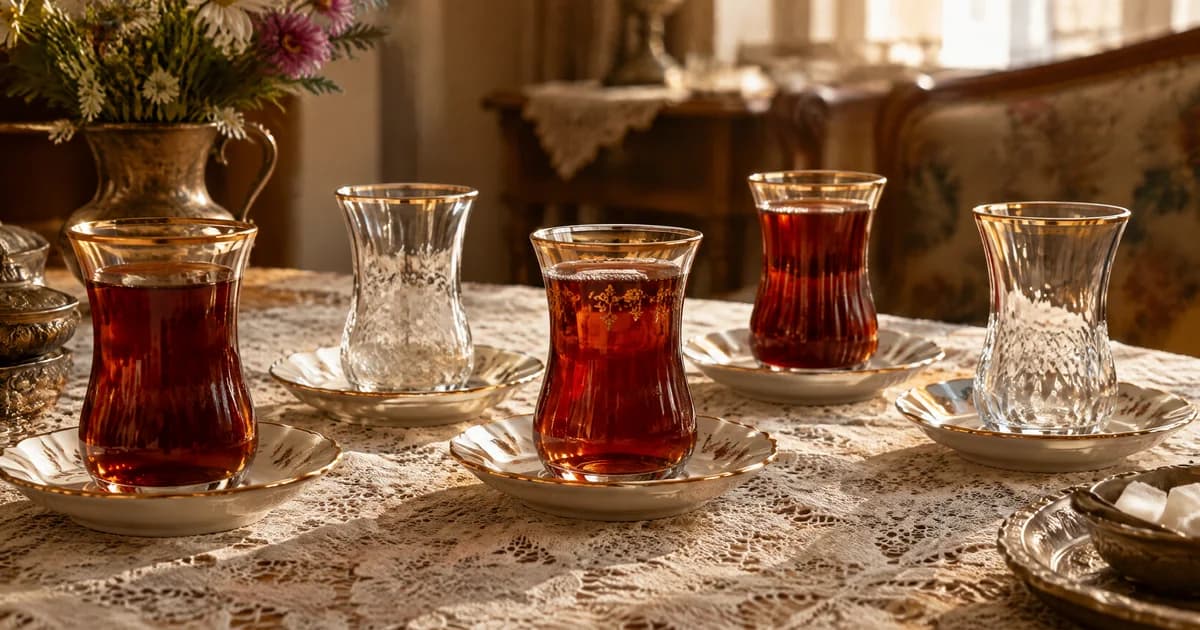
The Turkish tulip-shaped tea glass — known in Turkish as ince belli çay bardağı — is one of the most recognisable symbols of Turkish tea culture, and its shape is far more than decorative. The clear glass lets you see the colour of the brew, the wide rim helps the surface cool more quickly, and the narrow waist makes the glass easy to hold by the edge. In this article we explain why the form works so well, look at the available sizes and share tips on care and cleaning.
A Brief History: More Than Just a Glass
There are various accounts of exactly when and by whom the tulip-shaped tea glass was first designed; most are difficult to verify with documented evidence. What is certain is that today this glass has become virtually inseparable from tea — in homes, tea houses, workplaces and open-air tea gardens alike. For many people, the feel of the glass in the hand is as much a part of the ritual as the taste of the tea itself. What has made it endure is not legend but practical design.
The glass is also a language of hospitality. An empty glass promptly refilled, a spoon placed on top of the glass, a small sugar cube set on the edge of the saucer — these are all part of the silent signals at the table. In many homes, a carefully kept set of glasses is brought out when guests arrive; at weddings and holidays, hundreds of glasses are filled one after another.
Form Follows Function: Why Is the Glass Shaped This Way?
Every part of the tulip-shaped tea glass contributes to the drinking experience:
- Clear glass and colour visibility: Adjusting the strength of the brew by eye is common practice with Turkish tea. The transparent glass lets you judge the colour at a glance. The bright red hue most people look for is popularly known as "rabbit's blood" tea.
- Easy to hold by the rim: The tulip-shaped glass typically has no handle. Holding it by the upper rim or the waist with your fingertips makes it easy to carry without pressing your palm against the hot glass for long.
- Flared rim: The outward-flaring rim gives the tea a wider surface area at the top. This helps the upper portion cool more quickly, so the first sips can be taken without scalding the tongue. The wide opening also lets the aroma reach the nose with the rising steam.
- Narrow waist and base: The tapered waist and relatively narrow base help the hot tea in the lower part of the glass stay warm for longer.
- Small volume: The small size means the tea is finished before it goes cold, so every glass is poured fresh and hot. The Turkish tradition of "one more glass" is largely fuelled by this compact volume.
Turkish Tea Glass Sizes
Tulip-shaped tea glasses come in several sizes on the market. Although exact dimensions vary by manufacturer, a general distinction can be made:
| Type | Approximate volume | Best suited for |
|---|---|---|
| Small | Slightly less than a standard glass | Those who like frequent top-ups, serving guests |
| Standard | Approximately 100 ml | Everyday use, breakfast table |
| Large | Noticeably more than a standard glass | Those who prefer a longer, single serving |
When buying, the most reliable approach is to check the millilitre capacity in the product description. Knowing the volume also helps you add the concentrate and water in the same ratio every time.
Glass quality matters just as much as size. A glass with even thickness, a flat-sitting base and high clarity will show the colour accurately and withstand sudden temperature changes better. Glasses with noticeable waviness, bubbles or colour distortion around the waist can make the tea look different from its true colour. When buying for home, choosing a set that matches your existing saucers also makes it easier to replace a broken glass.
How to Serve Tea in a Turkish Tea Glass
- Prepare the glass: Pouring boiling tea into a very cold glass can stress the glass. In cold weather, it is good practice to rinse the glass with a little warm water first.
- Add the concentrate first: Pour the desired amount of concentrate from the teapot according to how strong you like it.
- Then add hot water: Top up with hot water from the lower kettle of the Turkish double teapot (çaydanlık), adjusting the colour to your preferred strength.
- Don't fill to the very top: Leaving about a finger's width of space at the top makes the glass easier to hold by the rim and prevents spills.
- Serve on a saucer: The small tea saucer provides a place for the spoon and sugar and protects the table from heat.
Naturally, the quality of the tea in the glass matters just as much as the glass itself. Choosing the right teapot helps you achieve a well-balanced brew — have a look at our guide to choosing a teapot for more on this.
Care and Cleaning
Over time, a brown tea stain can build up inside tulip-shaped glasses. As the glass becomes cloudy, it becomes harder to see the true colour. The following methods generally work well to keep your glasses sparkling:
- Rinse the glass with hot water straight after use; concentrate left to dry at the bottom is much harder to remove later.
- Rinse perfumed detergents off thoroughly with plenty of water — otherwise the scent can carry over to the next brew.
- For stubborn stains, gently scrub with bicarbonate of soda and rinse well.
- For limescale marks, soaking briefly in water with a splash of vinegar can restore the shine.
- If you use a dishwasher, position the glasses so they cannot knock against each other.
- Avoid plunging a very hot glass into cold water; the sudden temperature difference can crack thin glass.
Frequently Asked Questions
How many ml does a Turkish tea glass hold?
A standard tulip-shaped tea glass generally holds approximately 100 ml. Because the volume can differ between small and large models, checking the millilitre information on the product label is the most reliable approach.
Why is the tea glass tulip-shaped?
The tulip shape makes it easy to hold by the rim, the wide mouth lets the surface cool faster, and the clear glass shows the colour of the brew. The form is therefore both practical and elegant.
How do you hold a Turkish tea glass?
A tulip-shaped tea glass is usually held by the upper rim or the waist with the fingertips. Not filling the glass to the very top makes it easier to hold and prevents burning your hand.
How do you remove tea stains from the glass?
Tea stains usually come off when gently scrubbed with bicarbonate of soda and rinsed thoroughly. For limescale marks, soaking briefly in water with vinegar can also help.
Why does a tea glass crack when you pour boiling tea into it?
A sudden temperature difference can create stress in thin glass. Rinsing a cold glass with warm water first and avoiding plunging a hot glass into cold water reduces the risk of cracking.
A Grand Tradition in a Small Glass
Behind its simple appearance, the tulip-shaped tea glass holds a cleverly designed form that makes drinking tea easier. When a good glass meets a well-brewed tea, the pleasure at the table is complete. If you are looking for tea for your breakfast table, browse our black teas, and read more about the role of tea at the Turkish breakfast table in our tea and Turkish breakfast article.