
What Is Rabbit-Blood Tea? How to Brew the Perfect Colour
7 October 2026 · Berberoğlu Çay
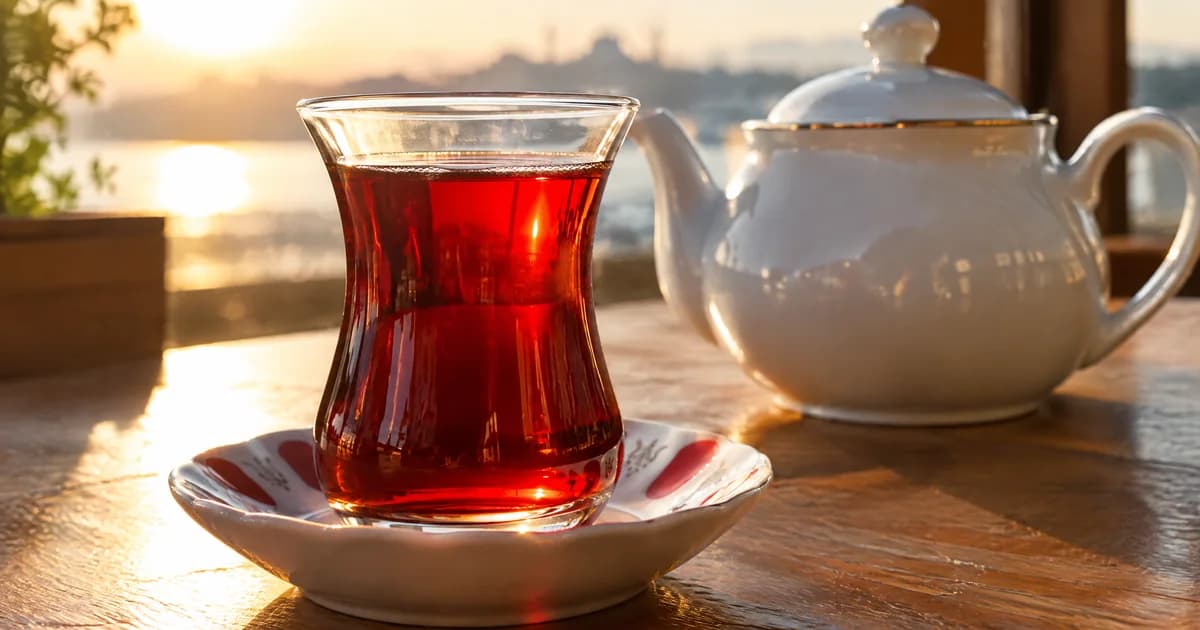
Rabbit-blood tea (tavşan kanı) is the ideal brew — neither too pale nor too dark, but clear, bright and deep reddish-amber when held up to the light. All you need to achieve it is quality leaf, fresh water low in lime scale, the right tea-to-water ratio and a patient, unhurried steep. If your tea looks cloudy, near-black or washed-out yellow, one of those balances is usually off.
What Does "Rabbit Blood" Mean?
In Turkish tea culture, colour is the first sign of flavour. The term "rabbit blood" (tavşan kanı) describes that beautiful hue visible through a slim-waisted glass: deep yet clear, with a reddish glow that lets light pass through. In tea houses, at family tables and in open-air tea gardens, it is the most common answer to the question "How would you like your tea?"
Rabbit blood is not a single colour code but the name for a balance: the tea is neither so pale it tastes watery, nor so dark it has turned bitter. You can see the bottom of the glass, yet the colour is far from weak. That balance signals a balanced taste too — gently astringent, smooth and easy to drink.
Where Does the Colour Come From?
Black tea goes through withering, rolling, oxidation (also known as fermentation), drying and grading. The reddish-brown colour it yields when brewed comes largely from the transformation of the leaf's natural compounds during oxidation. In other words, a beautiful colour starts with well-processed leaf and is then revealed during brewing.
An important note here: natural tea releases its colour in hot water, gradually, over minutes. If dry tea turns deep red within seconds of being dropped into cold water, the colour may come from an additive rather than the leaf. We explain how to check for this in our article on how to spot dyed tea.
What Is Your Tea Telling You by Its Colour?
| Appearance in the glass | Likely cause | What to do |
|---|---|---|
| Pale yellow, watery | Too little tea, short steeping, too much water | Increase the amount of tea or steep longer |
| Clear deep reddish (rabbit blood) | Balanced ratio and timing | Note your measurements and repeat |
| Near-black, bitter | Too much tea, steeped too long | Reduce the amount of tea; make a fresh brew |
| Cloudy, dull | Hard (limescale-heavy) water, repeatedly boiled water | Use fresh water low in lime scale |
| Thin film on the surface | Hard (limescale-heavy) water | Try filtered or spring water |
How to Brew Rabbit-Blood Tea: Step by Step
- Warm the pot: Swirl a little hot water in the upper pot. A cold pot lowers the water temperature in the first few minutes.
- Measure your dry tea: Add tea to the upper pot according to the number of people and your preferred strength. Using the same spoon every time is the easiest way to get consistent results.
- Use freshly boiled water: Bring the water in the lower pot to a fresh boil. Water that has been boiled over and over can dull the colour of the tea.
- Steep on a low heat: Pour the water over the tea, place the upper pot on top of the lower one and turn the heat down. For Berberoğlu tea we recommend about 25 minutes on a low heat.
- Pour the concentrate first: Fill about one third of the glass with concentrate, then top up with hot water. Hold the glass to the light to judge the depth of colour.
- Don't leave the brew sitting: Concentrate left on the heat too long darkens and turns bitter. When serving a large group, prepare a fresh brew when needed.
You can find more detail on steeping times and heat settings in our article on how to brew Berberoğlu tea.
4 Hidden Factors That Affect Colour
1. Water
Water high in lime scale can cloud the colour and leave a thin film on the surface. Water that is low in lime scale and free from odour produces a noticeably brighter cup. We cover the topic in more detail in our article on the best water for tea.
2. Leaf Quality and Freshness
Tea that has gone stale, absorbed moisture or been stored poorly loses both its colour and its aroma. Keeping your tea in a sealed container in a cool, dry, dark place away from strong odours will preserve its colour.
3. The Glass
Rabbit-blood colour looks its best in a clear, thin glass. The slim-waisted Turkish tea glass lets light meet the brew, making it easy to judge the tone. Thick or tinted glass distorts the true colour.
4. Time on the Heat
The longer the pot stays on the heat, the darker the colour becomes and the harsher the taste. Rabbit blood is captured while the brew is still fresh.
Serving Without Losing the Perfect Colour
Getting the brew right is only half the job; the other half is keeping the colour during service. If the first glasses at a busy table are rabbit blood but the last ones are dark and bitter, the problem is usually the serving routine. These small habits make a big difference:
- Pour the same amount of concentrate into every glass; use a fixed measure such as one third of the glass rather than guessing by eye.
- Make sure the water pot stays hot; lukewarm water fades the colour.
- After filling the glasses, hold them to the light for a quick check — it is easy to lighten a dark glass with a little water or top up a pale one with more concentrate.
- During long gatherings, consider making a fresh brew roughly every hour.
Common Mistakes
- Using too much dry tea to make the brew look darker (the colour deepens but the taste turns bitter).
- Letting the teapot bubble away on a high heat.
- Re-boiling water that has cooled in the pot.
- Adding cold water to the glass to adjust the colour.
- Serving concentrate that has sat on the heat for hours.
- Storing tea in a damp, open jar or in a spice cupboard (the leaf absorbs odours and moisture, and the colour weakens).
Most of these mistakes can be corrected within a few days. Brew with the same measure, the same water and the same timing for a week, then compare the results — you will find your own perfect rabbit-blood setting in no time.
Frequently Asked Questions
What is rabbit-blood tea?
Rabbit-blood tea is the ideal brew: clear, bright and deep reddish-amber in colour — neither too pale nor too dark.
How do you brew rabbit-blood tea?
Place a measured amount of dry tea in a warmed pot, steep with freshly boiled water on a low heat, then fill about one third of the glass with concentrate and top up with hot water. For Berberoğlu tea, we recommend about 25 minutes on a low heat.
Why does my tea look cloudy?
The most common causes of cloudiness are limescale-heavy water and water that has been boiled repeatedly. Switching to fresh water low in lime scale usually solves the problem.
What should I do if my tea is too dark and bitter?
Use less dry tea, don't leave the brew on the heat for too long, and pour less concentrate into the glass.
Is it normal for tea to darken very quickly?
Finely cut teas can release colour a little faster; however, if dry tea turns deep red within seconds even in cold water, it is worth checking for possible dye.
Conclusion: The Right Colour Heralds the Right Flavour
Once you hit that rabbit-blood colour, note the measurements you used — the rest is simply habit. Well-processed leaf is half the battle: try Mayıs Black Tea 1000 g, made from the first flush of the season, or Tiryaki Black Tea 1000 g for those who love a full-bodied brew, and find your own perfect rabbit blood. For more habits that can spoil the colour, have a look at our article on tea-brewing mistakes.