How to Choose Quality Tea: Leaf, Aroma, Colour and Dust Ratio
7 October 2026 · Berberoğlu Çay
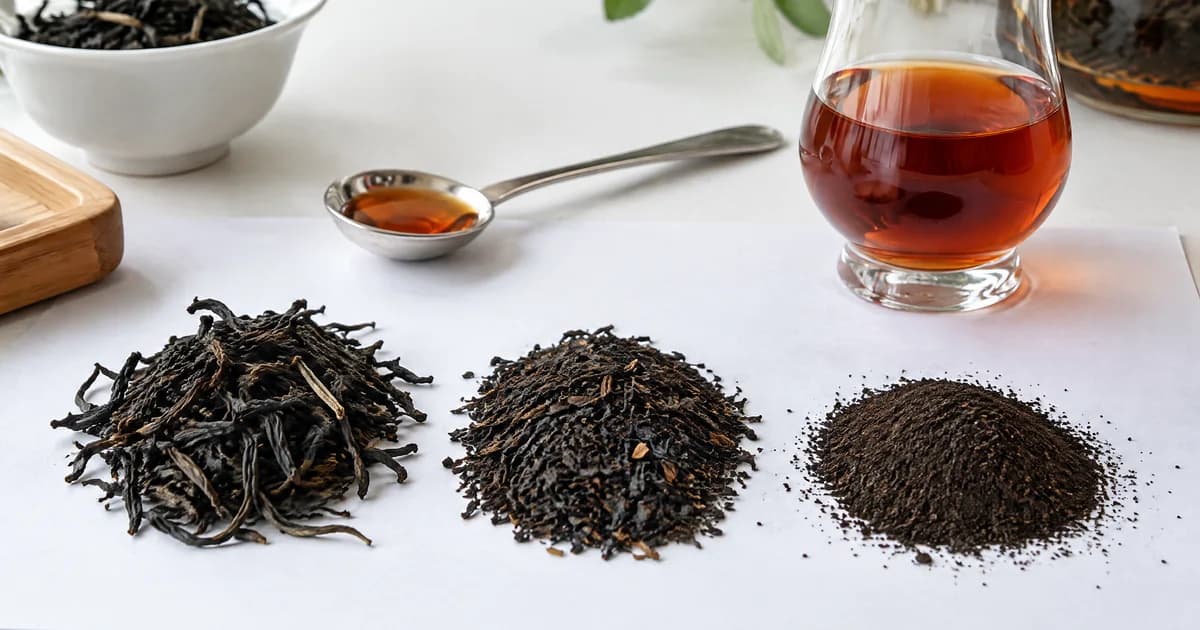
Choosing quality tea comes down to five things: the appearance and dust ratio of the dry leaf, the aroma when you open the packet, a simple hand test, the colour and clarity after brewing, and finally the taste and producer information on the packaging. Quality tea smells clean, releases its colour at a natural pace, brews clear and leaves a balanced astringency on the palate.
1. Dry Leaf Appearance
The first thing to examine when you open a packet is the leaf itself. Black tea is produced through withering, rolling, oxidation (commonly called fermentation), drying and grading (sieving). When this process is well managed, the resulting leaf shares certain characteristics:
- Uniform, large and twisted structure: The particles should be largely similar in size.
- Natural dark colour: Dry black tea typically ranges from dark brown to black with a slightly matte finish.
- No foreign matter: Excess stalks, debris, stones, grit or oddly coloured particles should not be visible.
- Excessive shine is suspect: An artificial gloss or a coloured coating on the leaves warrants caution.
If you are curious about how leaves reach this state, we explain each production step in our how tea is produced article.
2. Dust Ratio
A certain amount of fine particles in every packet is normal; tea breaks up during transport and packaging. However, if there is a thick, flour-like layer of dust at the bottom, it can cause the tea to brew very quickly and darkly, turn bitter fast, and pass through the strainer into the cup.
An important distinction should be made here: some products are intentionally composed of fine particles and this is clearly stated in the product name. For example, fine-grade teas that pass through a sieve may be preferred by those who enjoy a quick, intense brew. The problem is not the presence of fine particles as such, but an unexpectedly high dust content in a product sold as large-leaf tea.
3. Aroma
The smell when you open the packet tells you a great deal about the tea's freshness and storage conditions.
- Good sign: A clean, slightly sweet, pleasant scent reminiscent of dried leaves.
- Bad sign: Mould, dampness, dust, plastic, detergent or spice-like foreign odours. Tea absorbs surrounding smells easily; improperly stored tea will carry them.
- No smell at all: Tea that gives off virtually no aroma may have been left exposed for a long time or gone stale.
Carry out the aroma test the moment you first open the packet; sniffing while food is cooking in the kitchen or right after applying perfume can be misleading. To detect the scent more clearly, place a pinch of tea in your palm and breathe gently over it; the warmed leaves will release their aroma more distinctly.
4. Hand Test and Cold Water Test
You can check the tea you have bought at home with simple methods:
- Palm test: Gently rub a pinch of dry tea in your palm. Natural tea leaves no noticeable colour on your hand; if an orange-red dye mark remains, be cautious.
- Damp tissue test: Place a few tea particles on a moist white tissue. If coloured stains appear on the tissue quickly, this is cause for suspicion.
- Cold water test: Drop a pinch of tea into a glass of cold water. Natural tea releases its colour very slowly and faintly in cold water; if a deep orange-red colour appears within seconds, the tea may contain added dye.
These tests are no substitute for laboratory analysis, but they can help you spot a suspect product. For full details on the subject, be sure to read our how to identify dyed tea article.
5. Brewed Colour, Clarity and Taste
The real test takes place in the teapot. Brew the tea using your usual method and look for the following when you pour a glass:
| Characteristic | In quality tea | What to watch out for |
|---|---|---|
| Colour | Clear, bright reddish-amber tones | Colour that forms very quickly, opaque and excessively dark |
| Clarity | Translucent when held up to light | Cloudy, sediment-laden appearance |
| Taste | Balanced astringency, clean finish | Unexpectedly weak or harsh, acrid taste relative to the colour |
| After standing | Remains drinkable even after sitting for a while | Rapid bitterness and off-flavours |
| Cup rim | Ordinary residue with normal use | Pronounced coloured film on cup and spoon |
One particularly important clue: colour and taste should be in harmony. A tea that produces a very dark colour yet tastes watery and bland may indicate that the colour has been achieved artificially. Bear in mind that brewing technique also has a major effect on the result; we have compiled common mistakes in our tea brewing mistakes article.
6. Packaging and Producer Information
Quality tea has nothing to hide about who made it and where. The following should be legibly displayed on the packaging:
- Name and address of the producer,
- Product name and type,
- Batch/serial number,
- Production date and use-by or best-before date,
- Net quantity and storage conditions.
Avoid tea sold without labels, in open containers or in packets with no producer information. We discuss why tea of unknown origin is risky in our risks of unregulated tea article. It is also important for freshness that the packaging is sturdy and sealed against air and moisture.
Price is another clue. Tea that is unusually cheap compared with similar products on the market may come from low-quality leaves or an untraceable supply chain. Of course, not every expensive tea is good; but a strikingly low price is reason enough to carry out the checks above more carefully.
Frequently Asked Questions
How can you tell if tea is good quality?
Quality tea has uniform, naturally coloured leaves and a clean aroma. When brewed it produces a clear colour and balanced taste; the packaging clearly states the producer information.
Is dust in tea a bad thing?
A certain amount of fine particles is natural. However, excessive dust in a packet sold as large-leaf tea can cause it to turn bitter quickly and reduce the overall quality.
Does very dark brewing mean quality tea?
Not necessarily. Colour that forms very quickly and is opaque — especially if the taste is weak — may indicate added dye. Colour and taste should be in harmony.
How can you test for dyed tea at home?
Drop a pinch of tea into cold water: natural tea releases its colour very slowly and faintly. If a deep orange-red colour appears within seconds, or if rubbing the leaves in your palm transfers dye to your skin, exercise caution.
What should quality tea smell like?
It should have a clean, slightly sweet scent reminiscent of dried leaves. Mould, dampness or foreign odours point to poor storage or staleness.
Good Tea Passes the Eye, Nose and Tongue Test
Choosing quality tea does not require expertise; looking at the leaf, smelling it, performing simple tests and reading the label is usually enough. Berberoğlu Çay processes fresh tea leaves sourced directly from growers at its own factory in Rize. You can start with Mayıs black tea, made from Rize's first flush, and explore all options in our packaged teas category.