
What Water Should You Use to Brew Tea? Limescale, Filters & Temperature
7 October 2026 · Berberoğlu Çay
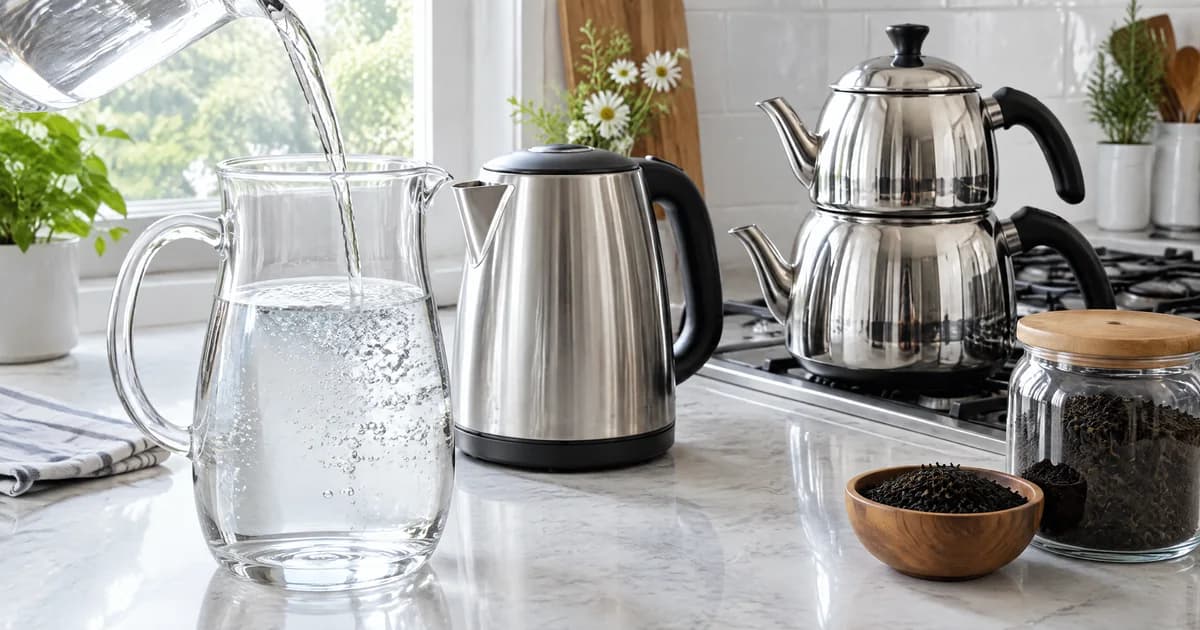
What water should you use to brew tea? The short answer: odourless, tasteless, low-limescale water freshly drawn from the tap. Bring it to a full rolling boil, pour it straight into the teapot without delay, and your tea will have a clear colour and a balanced flavour. Hard (limescale-heavy) water, repeatedly boiled water or chlorine-smelling tap water can make even the finest leaves produce a flat, lifeless cup.
The vast majority of a cup of tea is water. That is why changing your water often makes a bigger difference than changing your tea brand. Below you will find a practical roadmap you can follow at home.
Why Does Water Affect the Taste of Tea So Much?
When black tea is brewed, the compounds responsible for colour, aroma and that pleasantly astringent character pass from the leaf into the water. If the water contains dissolved minerals, chlorine or any odour, these interact with those compounds. The result: the same tea can taste completely different in different cities — or even in the same house with different water.
- Mineral content: Very high mineral levels dull the colour and can form a thin film on the surface.
- Chlorine and odour: The smell of chlorine in mains water overpowers the tea's natural aroma.
- Freshness: Water that has lost its dissolved oxygen — left standing for a long time or boiled repeatedly — makes tea taste flatter.
How Does Hard (Limescale-Heavy) Water Spoil Tea?
Hard water carries high concentrations of minerals such as calcium and magnesium. If a white deposit builds up on the bottom of your kettle, your water is most likely hard. This type of water causes several problems for tea:
- An oily-looking film that shimmers in the light can form on the surface of the tea in the cup.
- Instead of a bright red, the colour can look cloudy and brownish.
- The taste flattens out; that lively, slightly astringent character disappears.
- Limescale builds up in the kettle and samovar, eventually affecting heating efficiency and the taste of the water itself.
On the other hand, completely mineral-free water is not ideal either. Tea brewed with pure, demineralised water can taste flat and "empty" to some people. The goal is balanced water — not too much, not too little.
Tap, Filtered or Bottled: Which Is Better?
Because every household's water is different there is no single right answer, but a general comparison is possible:
| Water type | Advantage | Point to watch |
|---|---|---|
| Tap (mains) water | Convenient and economical | Chlorine smell and limescale vary by area; any odour will be noticeable in the tea |
| Filtered (jug or under-counter) | Can reduce odour and some of the limescale | Benefits decline if cartridges are not replaced on time |
| Large bottle / small bottled water | Consistent taste, no odour | Check the mineral values on the label; once opened, store in a cool place away from sunlight |
| Mineral water (naturally mineralised) | — | High mineral content and carbonation are not suitable for tea; not recommended |
Here is a practical test you can try: brew the same tea on the same day with two different waters using the same method. Compare clarity, surface film and taste side by side. More often than not, the difference is obvious from the very first sip.
What Temperature Should the Water Be?
Black tea needs high temperatures for the leaf's full aroma to develop. In the traditional Turkish method the water is brought to a full boil and poured straight into the top pot of the Turkish double teapot (çaydanlık) without waiting. Green tea, on the other hand, prefers a lower temperature; boiling water can make green tea bitter. As a general rule:
- Black tea: Freshly boiled water, right at boiling point.
- Green tea: Water that has been left to rest for a few minutes after boiling, so it cools slightly.
- Herbal teas: This varies by herb; it is best to follow the instructions on the packaging.
If you are curious about the differences between black and green tea, take a look at our article on the difference between black tea and green tea.
Does Re-Boiled Water Spoil Tea?
Re-boiling the water left in the kettle over and over is an extremely common habit in homes. But it is not a good idea for tea. Every time water boils it loses dissolved oxygen and its mineral concentration rises through evaporation. The result: a flatter, more "tired" taste and, in hard-water areas, a more noticeable surface film.
- Empty the kettle and fill it with fresh water for every brew.
- Rather than just topping up water that has been sitting on the stove all day, replace it completely from time to time.
- Do not use water left in the kettle overnight for your morning tea.
This small habit is one of the most common mistakes in Turkish households. We have gathered the others in our article on tea brewing mistakes.
A Quick Checklist You Can Use at Home
- Descale your kettle and samovar regularly (boiling with vinegar or citric-acid solution and rinsing thoroughly is a common method).
- If your water has an odour, use a filter or switch to an odour-free drinking water.
- Fill with fresh water for every brew.
- Bring the water to a full boil for black tea; let it cool slightly for green tea.
- Stick to the recommended brewing time. For Berberoğlu tea we suggest roughly 25 minutes on a low heat; full details are in our 25-minute brewing guide.
Tea on the Highlands, at the Country House or with Well Water
In the Black Sea region many homes use spring, stream or well water, and the taste of tea brewed with these sources is often praised. Soft-character spring waters can indeed suit tea very well. However, you need to make sure that any natural source used as drinking water is clean and safe. If you do not know where the water comes from, or if it is cloudy or has an odour, the safest approach is not to use it for drinking or brewing until it has been analysed by local authorities or an accredited laboratory.
- Boiling can reduce microbiological risk, but it does not remove limescale, odour or chemical contamination.
- Spring water left standing in a container for a long time loses its freshness; consume it as quickly as possible.
- Keep containers out of sunlight, clean and sealed.
In short, "natural water" does not always mean "good tea water"; what we are looking for is clean, odourless and balanced water.
Frequently Asked Questions
What is the best water for tea?
Odourless, tasteless, low-limescale and freshly drawn water is the most suitable for tea. Whether it comes from a good filter or a quality bottled source, it should be brought to a full boil and used immediately.
Can you brew tea with hard water?
You can, but a film may form on the surface, the colour may turn cloudy and the taste may flatten. If possible, using filtered or softer water noticeably reduces these effects.
Can you re-use the water left in the kettle?
It is not recommended. Repeatedly boiled water loses oxygen and its mineral concentration rises, making the tea taste flat. Filling with fresh water for every brew is best.
Can you brew tea with mineral water?
Not recommended. Naturally mineralised and carbonated waters have a high mineral content that negatively affects the colour and taste of tea.
At what temperature should the water boil for tea?
For black tea the water should reach a full boil and be used immediately. For green tea, letting the boiled water cool for a few minutes prevents bitterness.
Conclusion: Good Tea Starts with Good Water
Finding the right water takes a few experiments, but it is well worth the effort. Tea brewed with fresh, odourless, low-limescale water reveals the true character of the leaf. The leaves where you will notice this difference most clearly are first-flush teas — the very first harvest of the season: try the test for yourself with Mayıs Black Tea 1000 g, and browse our black teas category for more options.