
Fresh Tea Leaf Producer Guide: Weighbridge, Waste Deduction, Receipt and Payment
7 October 2026 · Berberoğlu Çay
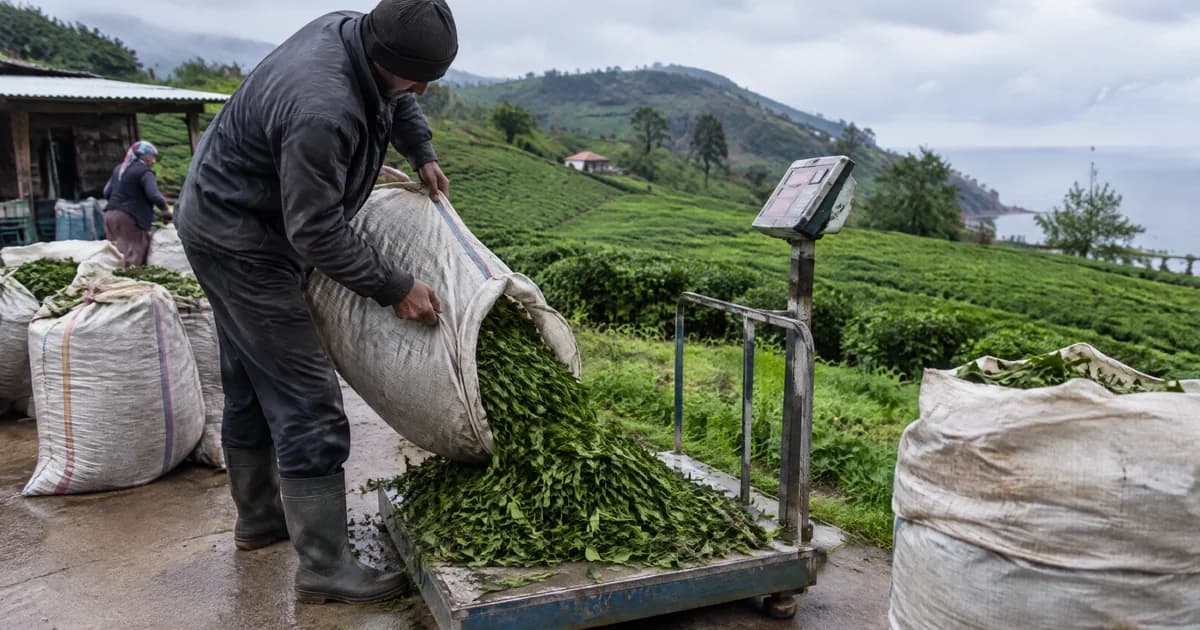
For the fresh tea leaf producer, calculating earnings correctly rests on four steps: picking the leaves at the right time and in the right way, transparent weighing at the weighbridge, applying waste deductions in the correct order, and documenting every purchase with a producer receipt (müstahsil makbuzu). When calculating waste, tare — such as the weight of the sack — is subtracted first, and the moisture/water deduction is then applied as a percentage of the remaining net crop. In this guide we explain each step in plain language with a worked example.
Correct Harvesting: Quality Leaf Starts in the Garden
No matter how much care is taken at the factory, good tea can only come from good leaf. In the Black Sea region, harvesting generally spans three flush periods: the first flush in May–June, the second in July, and the third in August–September (varying by year and altitude). For details, see our article on tea flush periods.
- Pick young shoots: The target is generally the terminal bud and the two to three fresh leaves below it. Hardened, woody stems and old leaves lower quality.
- Don't delay the flush: Shoots that are not picked on time become thicker and the leaves toughen.
- Plan your pruning: Pruning is generally done outside the harvest season; for timing based on your garden's age and condition, follow the advice of your local agricultural office and experienced producers.
- Don't crush the leaves: Transport picked leaves without compressing them; crushed leaves darken prematurely.
Delivering Wet and Damp Leaves
Leaves picked in the rain or before the dew has lifted weigh more because of the surface water. That extra weight is water, not tea, which is why a moisture/water waste deduction is applied at collection points. Another drawback of wet leaves is that they heat up quickly inside the sack, reducing quality.
- If possible, pick after the leaves have dried.
- Keep picked leaves in the shade in a well-ventilated spot — not in direct sunlight.
- Do not press the leaves down into the sack; allowing airflow delays heating.
- Deliver picked leaves to the collection point on the same day without delay.
Weighbridge Procedures: What to Watch Out For
Weighing is the most critical moment of any purchase. At a good collection point, the producer should be able to see the weighing with their own eyes and receive a written record of the result.
- Check the scale reads zero: Before weighing begins, make sure the display shows zero when empty.
- Read once the value has settled: After the sack is placed on the scale, wait for the reading to stabilise.
- Note the gross weight: The total weight including the sack is the gross weight.
- Ask about tare: Find out how much tare is deducted per sack.
- Get your ticket: Always request a ticket or record showing gross, tare, waste and net amounts.
How Is Waste Calculated? Why Does the Order Matter?
There are two separate deductions in waste calculation:
- Tare: The weight of non-crop materials such as sacks and bags. It is a fixed amount and is subtracted in kilograms.
- Moisture/water waste: Accounts for the water on the leaves. It is applied as a percentage.
The correct method is as follows: Tare is subtracted first, then the waste percentage is applied to the remaining net crop. The sack does not hold moisture; deducting the waste percentage from the gross weight including the sack effectively charges the producer for the sack's "moisture" as well.
The figures below are chosen purely as an example; actual tare and waste rates vary by collection point and leaf condition.
| Step | Correct order (example) | Wrong order (example) |
|---|---|---|
| Gross weight | 500 kg | 500 kg |
| Step 1 | Tare subtracted: 500 − 20 = 480 kg | 10% waste from gross: 500 × 0.10 = 50 kg |
| Step 2 | 10% waste from net: 480 × 0.10 = 48 kg | Tare subtracted: 500 − 50 − 20 |
| Payable quantity | 432 kg | 430 kg |
In this example the difference is 2 kg per delivery. That may seem small, but across dozens of deliveries over the season and hundreds of producers, it adds up to a significant sum. This is why it is your right to check which order tare and waste are applied on your ticket.
What Is a Producer Receipt (Müstahsil Makbuzu)?
A producer receipt (müstahsil makbuzu) is an official document issued by the buyer when purchasing goods from a farmer who is not required to issue an invoice. In fresh tea leaf purchases, the receipt is issued not by the producer but by the purchasing company. Today this document is largely prepared electronically as an e-Müstahsil receipt and transmitted to the Revenue Administration system.
A receipt generally contains the following information:
- The producer's identity details,
- The product purchased, quantity and unit price,
- Total amount,
- Statutory deductions (such as income tax withholding) and the net amount payable to the producer.
The types and rates of deductions are determined by legislation and may change over time. For your own situation, the most reliable approach is to consult a certified accountant or the relevant authority. What matters is that every purchase is documented with a receipt and that the quantity on the receipt matches your weighbridge ticket.
Payment Tracking
For a producer making many deliveries over the season, the answer to "how much did I deliver, how much has been paid, how much am I still owed?" should always be at hand. To achieve this:
- Keep the ticket and receipt for every delivery, or track them digitally.
- Note the date and amount of each payment.
- At the end of the season, compare total deliveries with total payments.
- If you notice a discrepancy, report it without delay to the company you delivered to, along with your ticket and receipt details.
Paper tickets can get lost or become unreadable from moisture over time. Keeping records digitally makes things easier for both producer and buyer and enables retrospective checks.
Berberoğlu e-Müstahsil Panel and Mobile App
Berberoğlu Çay purchases fresh tea leaves directly from producers for its factory in Rize. Producers who supply us can track their purchases, receipts and payments on a single screen via the e-Müstahsil panel. To access the same information from your phone, download the Berberoğlu mobile app from the App Store or Google Play. For any questions, reach us through our contact page.
Frequently Asked Questions
How is waste calculated for fresh tea leaves?
First, tare weight (e.g. the sack) is subtracted from the gross weight, then the moisture/water waste percentage is applied to the remaining net crop. Deducting the waste percentage from the gross weight including the sack produces a result that is unfavourable to the producer.
What is the difference between tare and waste?
Tare is the fixed weight of non-crop materials such as sacks. Waste is a percentage-based deduction for water and moisture on the leaves.
Who issues the producer receipt?
The producer receipt is issued not by the producer but by the company purchasing the product. Today this document is mostly prepared electronically as an e-Müstahsil receipt.
Can wet tea leaves be delivered?
They can, but a waste deduction will be applied because of the surface water, and wet leaves can heat up and spoil quickly inside the sack. If possible, it is best to pick the leaves when dry, keep them in the shade and deliver on the same day.
Where can I track my fresh tea leaf payments?
Producers who supply Berberoğlu can track their purchase, receipt and payment information via the e-Müstahsil panel or the mobile app.
See the Full Value of Your Hard Work, Transparently
Leaves picked at the right time, a transparent weighbridge, waste calculated in the correct order, and a complete receipt — these are the foundation of trust between producer and factory. If you are curious about how picked leaves are turned into tea at the factory, have a look at our article on how tea is produced.